The Tyranny of Boxsets

I finally caught up on some tv series recently, allowing entry into that blissful state where the merest risk of spoilers no longer requires running out of the room with ears covered. It lasted all of a week or two before the new series of Game of Thrones arrived. Excuse me while I cover my ears, and type with my nose.

I am the One Who Knocks ... to be let out, then to come straight back in again five minutes later

I am the One Who Knocks … to be let out, then to come straight back in again five minutes later

Breaking Bad I had held off from, to cling tenaciously to a world where there was still more Breaking Bad to see. Sorta like Shroedinger’s cat having HBO inside its box, and hence having no reason to escape its fate.

I go the occasional boxset binge, so as to contain the guilt of not doing something more productive into reasonably controlled bouts.

“But it’s the 21st century,” you cry. “Get with the streaming already.”

Gawd no. I got rid of my tv years ago to avoid plonking down and watching any old keck that was on. It’s enough strain defying ABC iView and Youtube, without even considering the arrival of Netflix in Australia. Boxsets at least allow a modicum of discipline.

And so we come to The Walking Dead.
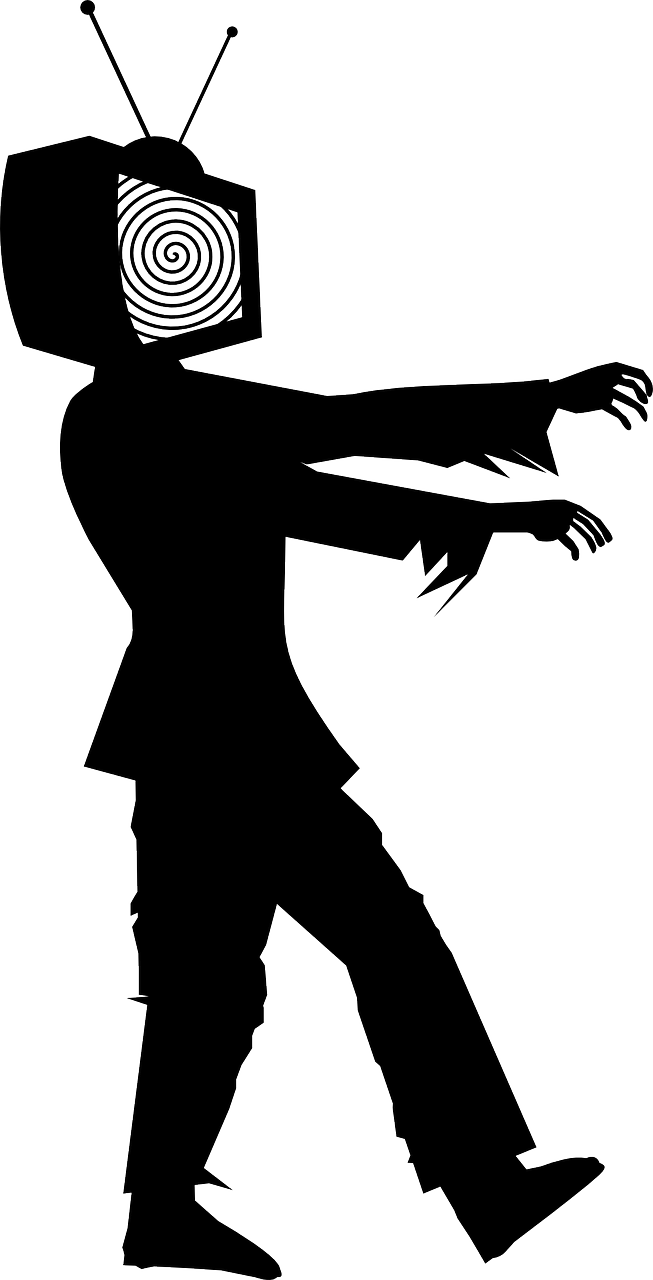
The Watching DeadI persevered through series two, sympathising with the writers’ plight of double the episodes on half the budget, despite it largely being a bunch of annoying people bickering on a farm for 12 episodes.

Series 3 was enjoyable, despite watching Charlie Brooker’s “A Touch of Cloth” at the same time, which mercilessly satirised a particular cliche/trope that was prevalent in Rick’s story arc.


But in catching up on series 4, in order to not be too spoilered by series 5 whispers, I think it’s time to draw the line.

The reason? One of my pet hates: Plot driven by people doing spectacularly dumbarse things.

  • Rick insists on going wandering without his gun. Whuh? That’s dumbarse.
  • Then he follows a bedraggled survivor, despite her staggeringly suspicious behaviour. Surprise surprise, she goes him one. Dumbarse!
  • He hangs round for a chat as she dies. Enough lingering around people about to suddenly change into a zombie, Walking Dead! And completely oblivious to the approach of, you know, zombies.

Meanwhile, back at base, everyone is incredibly blase about life in general. Is that hubris I can smell in the air, besides the rotting flesh?

  • A young girl claims zombies are still people, no doubt setting up for her to let some free or something dumbarse.
  • A young guy gives his girlfriend a peck on the cheek before casually going on a supplies run. Well, at least he didn’t wear a red shirt.
  • A couple get all smoochy and devoted, but elect to take it slow. It’s a post-apocalyptic world of survival, people. Taking it slow is a bit of a luxury. At least get to first base before one of you inevitably gets munched in ten minutes time.

But most galling of all, it seems the series’ inciting incident is to be a young boy getting ill and karking it in the bathroom in the middle of the night, in the middle of the compound.

Which demands of me to ask: Where the hell are these people’s risk management protocols?

You live in a story universe where a person dying will quickly turn into a flesh-eating horror. Surely then, you’d keep a bit of an eye on anyone even remotely off-colour and, like, isolate them or something. Say, in a prison cell, given you’re camped out in a massive jail.
Spoiler alert for Walking Dead Series 6

Spoiler alert for Walking Dead Series 6

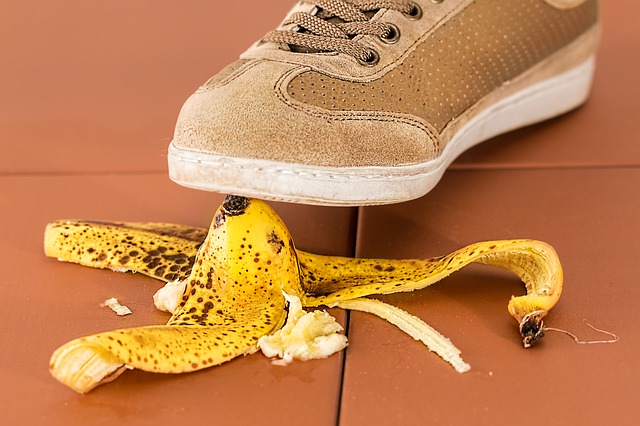
For that matter, all it would take is to slip on a freshly mopped floor. Or indeed, trip over the mop.

Hit your head on tree branch.

Cut yourself shaving *really* badly.

The modern non-zombie world is pretty trecherous at times, so the logistics of living in the world of The Walking Dead is an Occupational Health and Safety nightmare.

Yet, everyone blithely roams about by themselves, for lonely, wistful rememberances of fallen loves, their subsequent hasty beheading of those loved ones, or heavy philosophical musing oblivious to walkers lumbering up on them.
Sigh. Here we go again ...

Sigh. Here we go again …

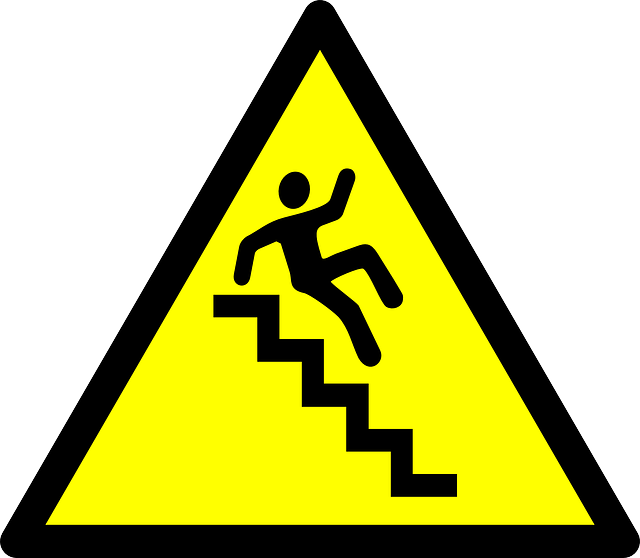
It’s an accident and subsequent disaster waiting to happen. Travel in pairs for pity’s sake! Keep watchful about each other. Don’t mop floors without putting out a number of “Slippery Surface” signs in appropriate places.

It seems to me, come the zombie apocalypse, your best bet is not to stick with on-the-edge policemen, survivalist enthusiasts, or superficially charming governors, but to hook up with OHS officers.


They know where lean a mop where it won’t cause a sudden outbreak in your midst, or will stick a “Mind Your Head” on low door beams and the like. Even the odd “Careful now” wouldn’t hurt. Human survival is at stake people!

No, without due risk management, observe common sense safety practices, or even simple precautions being observed to even a basic level, I’m afraid this is where The Walking Dead and I have to part ways. It’s the same problem I had with the film 28 Weeks Later, whose plot is triggered by two kids doing something spectacularly dumbarse.

At least abandoning them to their fates saves me a good ten or so hours per series, time I could more productively use for writing.

… Though, I have been meaning to check out House of Cards, just to compare Spacey’s version to the brilliance of Sir Ian Richardson’s Urquhart.

Time poor writer? You might say that, I couldn’t possibly comment.

If a Problem Comes Along, You Must Mop It

If a Problem Comes Along, You Must Mop It

Disclaimer: Okay, so I work in a Risk Management company, and get a little het up about these things. But mops, man, how hard are they to put away?
Posted in Story Plotting, Story Structure, Writing, Writing Productivity | Tagged , , , , , , , , , , , , , , | Leave a comment

49

It’s been an interesting past week, having entered and been short-listed in the Australian Writer’s Centre inaugural 49-word short story competition here in Perth.

© Copyright 2013 CorbisCorporation

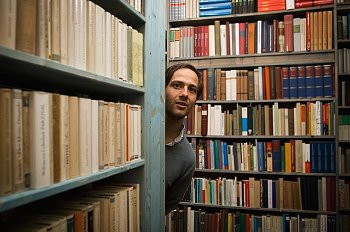
Posing in bookshop aisles: Harder than you think. And look out for weird photobomber guys, too

Their publicity arm is certainly active, with this article in last weekend’s Sunday Times covering the finalists.

How I wish there was an internationally recognised signal for “Dude, your hair is looking a bit windswept”, but ah well.

A fun hour of three people posing in innumerable different ways in a bookshop aisle.

This was followed by interest from the local newspaper, Perth Voice, which led to a Tuesday morning photo session, sitting in an overgrown vacant lot, wearing a pith helmet. As you do. Funnily enough, this is the second time this year I’ll be popping up in the local press wearing a pith helmet. I might start a trend. Article.

Writing a 49-word short story was a challenging task. I actually rewrote one of my myriad 100-word stories (must do that microfiction blog topic one day), and it really was an exercise in “kill your darlings” in deciding what had to go for the good of the story, and how to rephrase lines for the same effect while maintaining clarity. Or maybe the orginal version had 51 words of padding.The final edit came to 48 words, allowing me to put in an extra adjective. Luxury!

Posted in Editing, microfiction, Short Stories, Writing | Tagged , , | 1 Comment

The things you find on youtube

Back in the midsts of time, I did a few scriptwriting modules at uni. Some of the short film assignments were handed over to the film-making students for their term projects. Apparently one of mine got a gueurnsey, with an invite to the debut screening to follow. “Will there be free drinks?” I asked, but didn’t get a satisfactory answer.

Heard no more, thought no more about it. Assumed it never eventuated.

Until pootling about the internetz, when I happened upon it. Well, a version, given a fair bit of directorial license.

Still has the quite dreadful title I bequeathed upon it, being a lame pun on “Goodbye, Mr Chips”. And all things considered, I had a couple of other scripts that were much more interesting. All revolved around sleep for some reason, but then, I was a student.

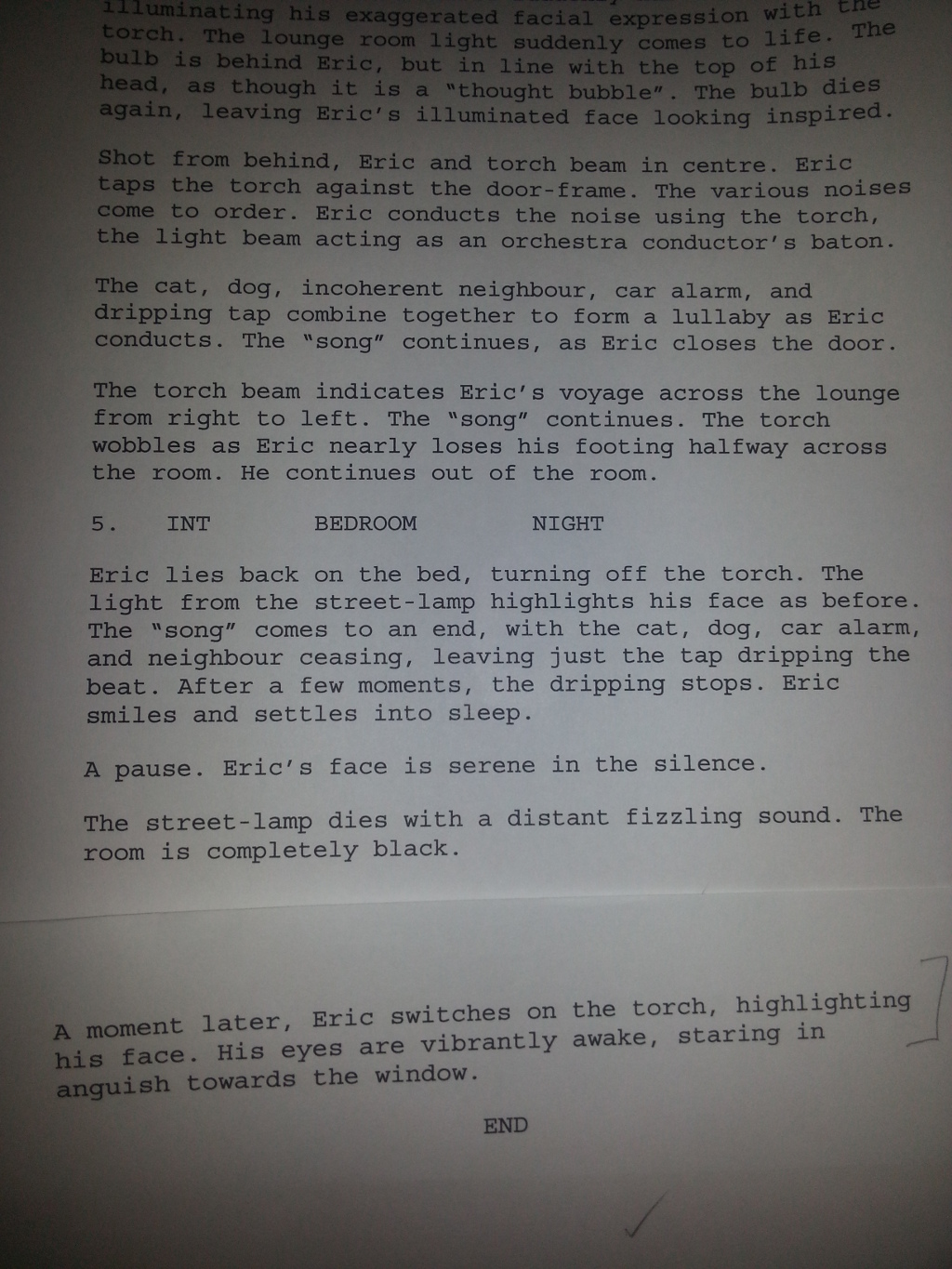
This was a sound and visuals experiment to prove to my tutor that I could write something without reams of dialogue. MrFishPageOne1024Having dug out the script, I recoiled in horror at the over-writing he so rightly castigated me for. I almost need to be physically held back not to get a red pen to it now.

In my head it was visually all about a dark screen with just a torch-beam moving through the house, but I see now that would have been a lighting guy’s nightmare.

Interesting to see decisions and deviations from the initial script, quite a different beast really. So much so, there’s no writer credit! Ah, that’s film for ya. Or maybe the uni removed names from the assignment pages. Whatever.

Different ending too. MrFishEndPages1024The original had the streetlight going out, its absence waking the guy up again, but I didn’t really express that very clearly and was cumbersome to show.

So there’s some dirty washing aired, my gruesome levels of over-writing of yore. Fortunately, my tutor, Murray Oliver, soon fixed that. His technique was to put people’s script on overheard projector for all to see then rip it to shreds. Now that teaches you to cut the crap.

Moral of the story: Maybe I should stop idly googling things …. you never know what you’ll come across.

Posted in Editing, Short film, Writing | Leave a comment

Developments

Ah yes, that regular blogging thing…

Well, stuff has been happening. The 10 minute plays at Eltham Theatre was a success, and they very kindly sent me a DVD of the performances and various other mementos. I’ll endeavour to wrangle my video editing skills to put on a quick excerpt at some stage, which will up the multimedia quotient of this blog to almost 20th century level.

In other developments, I was pleasantly surprised to be informed I’d won the Joe O’Sullivan Writer’s Prize, a short story competition I’d pretty much forgotten I’d entered (one of the benefits of submitting stuff then moving straight onto the next thing). Should be published in the Australian Irish Heritage Association magazine The Journal before long. There was talk of doing a radio interview at some stage, so in what is now becoming a multimedia frenzy, I’ll see if I can pop an excerpt on the blog if that eventuates.

MultimediaFrenzy

Multimedia frenzies. Coming to a confusing mirrorball near you …

A number of projects are in the offing. I’m involved in a group publishing “thing” that we’re hoping will become an ongoing outlet for Western Australian writers. More on that once a website eventuates and we go into blatant self-promotion mode.

Also, I’m collating a number of short stories for a planned e-book. Taking the getting-stuff-done advice from Chuck Wendig about putting it out there, I’ve been working away at a self-publishing project for the past year. Unless my procrastination glands successfully convince me to learn how to cartoon first, so as to have some illustrations in there. We’ll see. I’ll no doubt blog about the process, the hurdles, the tears, etc as things take shape.

The Perth Fringe Festival? You’re doing it wrong.

And I’ll likely be taking the plunge back into theatre next year, after a friend bemoaned how little there was to audition for lately. I suggested we do one of my plays for the upcoming Perth Fringe Festival, then had a look at some half-done script I’d gone “meh” about, thought up a couple of new bits and it burst back into life.

Bit late for Perth Fringe entry, plus it’s hard to approach venues and stuff when unsure if we’re talking an hour or full-length play … sorta have to finish it first to see what it turns out to be.

Using the above couple of projects as an opportunity to learn how to use my recent purchase of Scrivener, given both are proving to be organisational and structure nightmares. Along with importing the ever-deferred novel manuscript, and the skeleton of the next one. Okay, all I’ve done so far is set pretty colours for different character POVs per chapter, but it does make it all look very snazzy, and that’s half the battle of getting myself motivated.

Enough already.

Posted in Plays, Short Stories, Writing | Tagged , , , , , , , , , , | 1 Comment

Dictation tools

There’s something about writing by hand that works better for me than ploinking away at a keyboard.

You can take a pen and pad anywhere, without looking like a hipster sporting a laptop in coffee shops. My mind thinks just a little quicker than the pen moves, suiting pomodoro/timed writing, with no temptation to do a little keyboard editing while paused for a moment.  And no internet, solitaire, or other diversions that an eminently distractable attention span can be coaxed away to.

The problem though, beyond cramp, is typing it all in.

There is the advantage of minor tweaking while entering the content, like a sort of handy halfway between the first draft gurge and the second draft edit. But having upped the output with monthly quotas, I’ve found myself with hills of scribbled sheets. And that requires a whole additional inclination to type it all in. And frankly, I’ve hit a wall.

Dictation software was one solution happened upon while surfing, with another writer-by-hand expounding the virtues of a particular software package. Fair enough, says I, lets give it a go. Being not one of these shills who  name drop products in the hope of freebies from the relevant company (yet), the particular package I’m trialling shall remain unsaid.

First discovery I made: check your machine specs beforehand. I was dismayed to find my mid-range laptop is actually kicking on a bit. Bad times. Fortunately, my (even older) desktop had a bit more grunt to provide a reasonable response time from what is quite a memory-hogging application.

Second discovery was the learning phase, where you spend a not inconsiderable amount of time dictating some provided text so the software can accustom itself to your voice.

megaphone-50092_640One of the side benefits I imagined with dictation software was the opportunity to train for audio books or book readings. Call me wishful, but what author doesn’t dream of reading their etchings aloud in dulcet tones to an admiring potential market. If so, I’ve got a ways to go, having to repeat a lot of passages before the software finally okayed me for general parlay. Well, people do say I’m a mumbler at times. But I guess the software has to discern a wide range of vocab, larger than say a smartphone assistant would need to cover, so repetition is required to refine to better accuracy.

Finally, it was all ready for action. I plonked a USB mic in front of myself, found a page of etchings, opened the notepad tool, then pressed the button.

What an odd experience.

To be honest, the first attempt was a bit underwhelming. Best results came from reading at a slower pace than my usual caffeinated gabble, but misinterpretations were still frequent. Okay, possibly lazy diction was at fault, and the USB microphone might be a bit crap. old-lady-107404_640But the software did put me in mind of reading to a wizened old lady with an ear trumpet going “whaaaaat?” every few words.

And I did fear I was sounding something of a ponce in my bid to enunciate in the clearest possible manner, like a rather camp Viscount on Valium.

But, words were appearing.

And it was quite an entertaining way of plowing through my hasty scrawls, time flying by compared to the painful forcing myself to type a page or two. Especially once the fun of issuing “full stop”, “comma” and “new line” commands meant a bit of flow could happen. And slouching back in my chair like a louche Captain Kirk only added to the enjoyment.

Some of the mini-editing while typing was lost, it seeming more difficult to make changes on the fly mid-sentence. But combined with quick typing at the editor, a pretty effective technique could be developed with practice.

I’ll continue with it for the package’s trial duration to see if the process becomes more natural. agent-18741_640And I’m interested to see if the software does accustom to my voice more over time as claimed. Apparently some authors use dictation as their primary writing method. Not sure how free forming into a microphone would feel, being a visual person who needs to see the words on a page. Maybe an interesting experiment for later.

Pros:

  • It’s fun seeing how much translates correctly, commanding the cursor around the place
  • Reading your writing aloud is recommended for detecting clunky prose. This gets that phase happening early in proceedings
  • Grooming your reading voice for that future audiobook career
  • Hey, this actually whizzes by

Cons:

  • Do I really speak that incoherently? Sigh.
  • It does feel odd, burbling away, hunched over a desk mic
  • Better results come from slowing down and speaking clearly, making this questionably slower than typing. Or I could just get a computer made within the last ten years.
  • On the fly editing is a bit seat of the pants, but might improve with practise. Or better pants.
Posted in Dictation tools, Editing, Writing, Writing Productivity, Writing Tips | Tagged , , , , , | Leave a comment

Happening Things

So what’s been happening in these alledged busy past few months?

First off the bat, I snavelled runner-up in the Australian division of the Reader’s Digest 100 Word Story Competition. steak knivesIt’ll be in the April 2014 edition, coming to a supermarket shelf near you soon. Only a quick read, so chances are you could flick through a copy in the checkout queue if of a devilish anti-consumerist nature. Another couple of stories will be published in the Short and Twisted 2014 collection in a few months time.

100 word stories have become quite a quest of late, and a blog topic to come.

Next up, “Couch”, a short play I wrote some time ago but never quite found a home for, has made the finalists for the Eltham Little Theatre’s annual 10 Minute Quickies competition. It goes off to a local director to cast and put on for a May run of performances. Best of luck to the production, and apologies to the actors concerned for some of the more athletic stage directions.

And after a successful preview night to a Perth test audience a few weeks ago, the collaborative comedy monologue/burlesque “Lock-In Love” has premiered at the Adelaide Fringe Festival. A bit of Adelaide I probably wandered past

We’re somewhat stuck with the name “Floozy with a Heart” thanks to some early marketing, but that’s life. I popped over to see it kick off its run, having never visited Adelaide despite the existence of the Barossa Valley. After Adelaide, Chrissy Jo takes it to the Melbourne Comedy Festival.

The things we do to blatantly avoid promised manuscript edit deadlines.

Posted in Uncategorized | Tagged | 1 Comment

Ah, How’s the Irony

So, you start a blog about being time poor, then haplessly allow yourself to be swept aside by life to ever update it.

Admittedly, I’ve come close to actually posting, but that’s a little like coming close to dieting by thinking about how many calories would be avoided by not having the choc chip muffin, then scoffing it down all the same.

Mmm muffins

Mmm. Yum yum.

And my excuses are reasonably good. Becoming a home-owner and the sheer nonsense entailed there, for one thing. And … lots of other stuff, to name a few more.

Anyway, a couple of additions to the website, a vow to work out tags and categories properly, and a plan to post more regularly and be more social media’ry in general.

And here’s a posting by Elizabeth Spann Craig I read a while ago which neatly encapsulates some of the things I was likely to waffle on about in far more tedious fashion:

Tips for Writing in Short Blocks of Time

Posted in Uncategorized | Leave a comment

WriMo’s

November looms and with it comes the annual question for writers.

No, not ‘Why the hell are christmas decorations up already? I swear they’re getting earlier every year, etc, etc’.

It’s ‘Should I have a crack at NaNoWriMo?’

Sounding like a rejected catchphrase from Mork and Mindy (and with that, kids, I show my age), this is National Novel Writing Month. The annual frenzied quest to write a fifty thousand word novel in one month.

My few cracks at it each failed dismally early. My last attempt was pootling along wonderfully, till “Holy Bat-Cramp!” and I was relegated to the sidelines after the first week. The perils of drafting by hand.

Each year, good intention and planning crumple before the oppressive daily 1670 word count. Fail to make the daily quota and you’re gone. And why does life get weirdly busy on Novembers as soon as you set off?

Still, I ponder another NaNoWriMo bid. Like a fabled challenge to conquer. A Mount Everest. A rite of passage (pun deliberately avoided).

So what are the positives of taking on NaNoWriMo?

  1. Word counts force you to find opportunities to write.

    1670 words a day requires extra writing efforts. Auditing your daily schedule to spot gaps, what can be forsaken to make time for getting some words down? In checkout queues, at traffic lights, on the phone to long-winded relatives. Will universal karma unbalance if I ban sudoku for a month? korma

    For those of the “not enough hours in the day” brigade, NaNoWriMo provides an invaluable way to discover productivity.

  2. Ignoring the inner editor

    Word counts demand output. No time for perfectionism, critical appraisal or editing, all of which should be actively avoided during first drafting. No getting stuck endlessly reworking the same sentence, a la Joseph Grand.

    NaNoWriMo teaches how to shun the inner voice. Fix it in the edit … next month.

  3. Bugger me, this writing lark is hard work

    ‘A novel? A doddle!’

    NaNoWriMo dares such words into action. A few days in, it soon becomes apparent that knocking out a book ain’t easy. You better appreciate the skill of published authors to make something readable to a wide audience.

  4.  Just do it

    That big stack of scribbled ideas? Do something with them.

    “Nothing caters for my demographic anymore”. Write something that does.

    Out of your head, off vague to-do lists, and onto paper. Finally we find out if an idea has legs.

Then the case against:

  1. The word count

    All work and no play makes Jack a dull boy. 
    All work and no play makes Jack ...
    ...

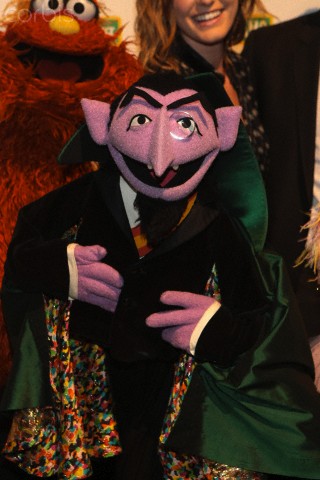
    As the Count on Sesame Street so often finds, life passes you by when an obsessive compulsion towards numbers takes over.

    A tongue in cheek thread on a NaNoWriMo forum invited tricks to expand the word count. Use full names. Exercise the description glands. Pretend contractions in speech are outlawed in a pedantic grammar-based dystopia.

    In the push to cross the line, does NaNoWriMo pressure lend itself to waffle, padding, and gaming the numbers? Sure, first drafts are allowed to be crap, but does the all-consuming urge to meet word count bury needles in more hay than useful?

  2. What sort of novel comes out of NaNoWriMo?

    Of all the multitudes hammering out words across the world, how many end up published?

    Do publishers shudder at the very mention of a NaNoWriMo manuscript? Horror enough some of the badly written manuscripts that arrive in slush piles, but one also written in a hurry?

    What sort of length is fifty thousand words anyway? Isn’t it more National Novella Writing Month?

  3. Existentialism

    As far as I know, NaNoWriMo generally doesn’t turn people into bleak Algerians smoking Gauloise cigarettes.

    But how many perfectly serviceable, promising ideas that might flourish with time and care are crushed by the sheer mass of urgent words?  How many fail the challenge, and walk away thwarted, questioning the meaning of their existence? Next thing you know, they’re out killing folk on hot beaches, and giving Robert Smith song ideas.

    Perhaps NaNoWriMo is a secret conspiracy to rid the world of writers banging on about their idea for a novel, by proving it actually sucked in the cold hard light of day.

The wash-up:

These doomed NaNoWriMo attempts did produce an integral tool for me.

Coveting the snazzy NaNoWriMo tracking graph of daily progress, I got to thinking … why wait twelve months? Why not use this all the time but with a slightly less daunting quota.

Unable to find an equivalent charting app, I fiddle-faddled a spreadsheet to meet my needs. This resulted in a cross-referenced, colour-coded, calc-celled uber-matrix that my inner control-freaking micromanager required. I even included an “excuses” column for days my future self couldn’t be bothered. Take that, procrastination.

As for a monthly quota, ten thousand words ended up as eminently doable. About a page of handwriting a day. Nowhere near the 50k booty of NaNoWriMo, but across twelve months gives one hundred and twenty thousand words, with a day’s consideration between each page rather than a harried rush.

For me, the monthly spreadsheet is my motivation. The compulsion to beat personal bests and graphing monthly comparisons gives me a sad little thrill of delight. Sometimes I make it, sometimes life’s too busy, sometimes I’m slack. But if the month gets away, unlike NaNoWriMo there isn’t the depressing eleven month wait to dwell on your failure till the next try.

Now, how to actually type in all this mass of hand-written output … that’s a story for another time.

Posted in Uncategorized | Leave a comment

Timed Writing

timed writing

Back in my more carefree years, I was looking to get my writing into gear. Plenty of ideas, but idleness and writing pretentious songs on my guitar tended to come first.

Hearing of authors pumping out thousand of words a day whacked my meagre efforts with the stark thick stick of reality. I couldn’t be a writer unless I was churning out similar wodges of words. Glumness, ennui, and more pretentious songs on the guitar ensued.

Somewhere along the way, I came upon the advice to set a timer and just write for half an hour. “Free-writing”. “The Pomodoro Technique”. “Psychological Flow”. Or just plain knuckling down and focussing for once, call it what you will.

pomodoro timerIt was surprising what came out of these sessions. Sometimes spontaneous gems, other times floundering rubbish. But usually there was at least one useful idea or turn of phrase.

Bottom line: Increased output. Filling notepads rather than just buying for the vicarious thrill of stationery purchases. And once started, more often than not another few pages might be pushed out. Yay!

Then procrastination and lethargy changed their tactics.

The half-hour session became a task requiring a day’s psyching up to face. Where to find time to squeeze it into a busy day of doing not very much in particular? Momentum might maintain for a day or two, but inevitably more and more cajoling myself to start the stopwatch meant the approach petered out. Pretentious songs on the guitar again, largely in D minor.

The timed writing approach required self-discipline. Half an hour became too easily dismissed to fit into a “busy” day. And it did lack the charm of sitting down to jot well-prepared thoughts as the mood took, every couple of aeons when such planets aligned.

Years later in one of her writing workshops, my good friend Marlish gave the suggestion of five minute free-writing sessions. It was a self-kickingly simple improvement. Who could argue against fitting in just five minutes? Fewer excuses to defer, less psyching. But how much can you actually get done in five minutes?

Surprisingly, quite a bit.

Yes, it’s illegible scrawl, but hey, it’s a first draft where just getting stuff down is the goal. Maybe 150 – 200 words is typical, depending on your cramp potential. And being two thirds of the way of a page, you might as well finish it.

True, there’s a good chance you’ll commit five minutes of aimless nonsense. But it’s only five minutes of aimless nonsense, hardly precious life seconds. The important thing is to start, something a significant number of incalcitrant horses are usually required to drag me to.

The most valuable thing is that it’s rare nothing of value emerges. Just one good sentence, phrase or idea to pop up is one thing more than you had five minutes ago.

red adairIt’s also a good way of kicking a dead end back into life. Just leap into it like Red Adair tackling a oil well blaze and see what happens. A significant and pleasantly surprising new direction can revive what was a comatose piece. And a story that surprises its writer stands a good chance of surprising the reader.

Opinions vary whether to stop mid-sentence as time runs out, so as to give yourself an entry point to the next day’s burst and urge to finish. I prefer to carry on and exhaust the momentum, but with a note of next action to entice tomorrow’s effort.

Of course, procrastination and lethargy will dictate that even five minutes is too hard. Leaving it till the last five minutes before bed makes it all too easy to say “tomorrow”. Even with the simplest of techniques, some modicum of self-discipline is required.

Verdict:

From my experience, the five-minute burst is one of the most effective ways to up output and kickstart momentum. True, it can be a torturous five minutes of wrenching angst, but hey, so’s plucking your nose hairs with tweezers. Apparently.

Posted in Writing, Writing Productivity, Writing Tips | Tagged , , , , , , | 1 Comment

The Time-Poor Writer

So, the intent to write, but not much free time to do it in the barrage of busy-ness of day-to-day life. Some of our own making, some unavoidable.

In my case, a full-time job, part-time parent, and some semblance of a social life in which to have adventures that might give experiences to write about.

Also, the ever-present lures of procrastination: there’s an entire Internet to surf, tv series box sets to slog through, idle whimsies to indulge, navels to contemplate.

So how to fit in productive pursuance of writing in the scant gaps that exist?

Various writing advice tomes suggest that in order to be a *real* writer, writing should be the priority. All well and good for the sweeping romantic vision of casting all aside to work your latest opus.

But living in squalor, etching in sweat with a stolen chicken feather because you can’t afford ink, while a dutiful spouse supports you through thick and thin? That’s just not practical in the modern world. And there’s no fun having your kids release tell-all biographies in later years about your neglect in pursuit of fame. Especially if they go on to sell more copies than you do.

So, in the face of busy commitment-drenched lives, the goal is to write in the gaps. Maximising opportunities to get something down when opportunities arise. Avoiding the time sinks and wasteful distractions.

How to do it? Beats me.

But I’m interested in life-hacking ideas or techniques that may help get the odd word down from time to time. Some might work, or be made to work with tinkering, whether for me or for others.

And at the very least, the blog will allow me more sweet sweet procrastination and deferral of whatever it is I should be otherwise working on.

Posted in Uncategorized | Leave a comment